Will America Take Two Steps Forward or Another Step Back
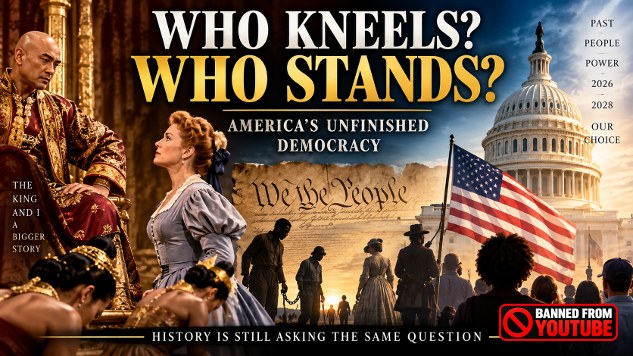
A familiar movie became a mirror. Watching The King and I again, something shifted, not in the film, but in the questions it started asking about power, kneeling, and who gets to...
Read more
Something unusual happened in Canadian politics recently. A central banker with no electoral history walked into one of democracy's rougher seasons and refused to pretend the weather was fine. Mark Carney did not promise to make anyone afraid of the right enemies. He just told people the truth, and enough of them found that refreshing to make him prime minister.

In 1922, William Jennings Bryan gave a commencement address at the University of Florida Law School. My grandfather was in the audience. That family connection to one of America's great economic reformers raises a question that still stings: if Bryan were alive today, would he recognize a single thing being sold to us under his movement's name?

Democracy did not arrive in Athens one morning fully formed, like a gift from the gods. Human beings were limiting power, arguing about fairness, and building consensus long before anyone carved a law into stone. The story of democracy is not a straight line upward — it is a recurring argument, one that every generation inherits and must choose to continue.

Joseph Goebbels was not the architect of Nazi ideology but its master salesman, and he documented his methods with precision. The techniques he developed to manufacture consent and control reality did not die with the Third Reich. They evolved, adapted, and now operate at scale across American politics, media, and digital platforms with ruthless efficiency.

Gerrymandering and voter suppression aren’t clever political strategies; they’re the termites eating away at America’s wooden beams. The house still looks pretty from the outside, but inside the joists are hollow. From Elbridge Gerry’s salamander-shaped district in 1812 to the modern algorithm-driven map wars, democracy has been rigged, rerigged, and then shrink-wrapped for partisan advantage. Republicans have turned suppression into an art form, while Democrats have tried to play nice. But niceties don’t win knife fights. The real question is whether fighting fire with fire could finally push the Supreme Court to outlaw the matchbox altogether.

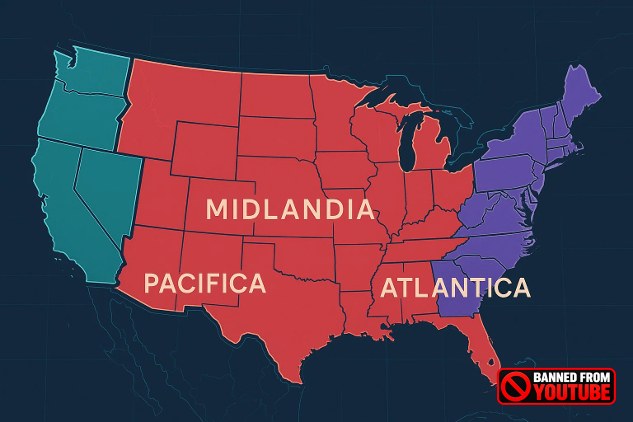
Imagine waking up one morning to discover that the United States no longer exists as a single nation. At first, it sounds like the stuff of dystopian fiction, but lately, even the word “breakup” has crept into political chatter.

America likes to think it buried eugenics with the Nazis, tucked it away with other embarrassments like leaded gasoline and segregation. But eugenics didn’t die. It rebranded. Today, it wears a suit, carries a briefcase, and calls itself “policy.” It votes in Congress, shows up at school board meetings, and even gives press conferences. It’s not about selective breeding anymore—it’s about selective survival.

Franklin D. Roosevelt, when pressed for bold action during the Great Depression, famously told activists: “Now go out there and make me do it.” It wasn’t a throwaway line , it was a roadmap. The people had to push. He knew change wasn’t handed down from the heavens; it was wrenched from the hands of power by a determined public. Today, as inequality deepens, political gridlock calcifies, and authoritarianism creeps like black mold, the question isn’t whether we need another Roosevelt moment. The question is: Who’s going to be the force that makes it happen?

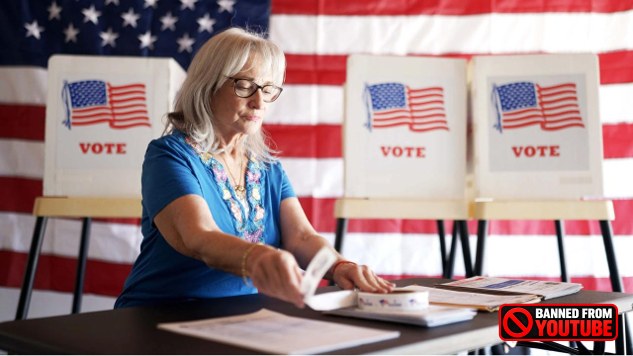
When the game is rigged and the referees have gone home, maybe it’s time the other team picked up the ball and started calling their own plays. That’s the debate now bubbling up from California to New York as Democrats stare down a Republican Party gleefully rewriting the rules of democracy, and drawing new lines on the map to make sure the other side never wins again.

What if I told you the 2026 election theft isn't something coming in the future—it’s already underway? Not with ballot-stuffing or broken machines, but with memos, executive orders, and backdoor data grabs disguised as “security.” While most folks are arguing over gas prices and social media bans, the Trump administration is quietly installing the machinery of electoral control—one voter roll at a time.

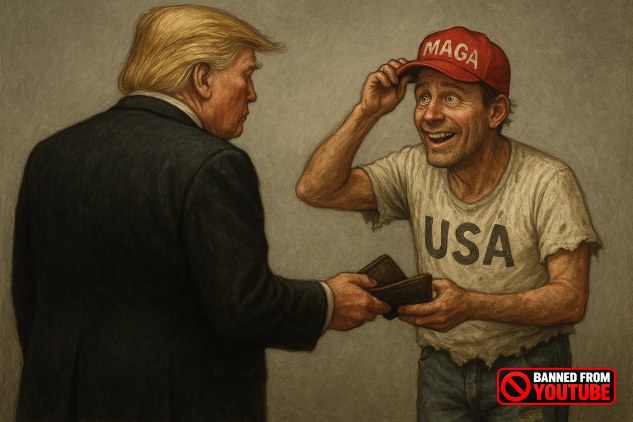
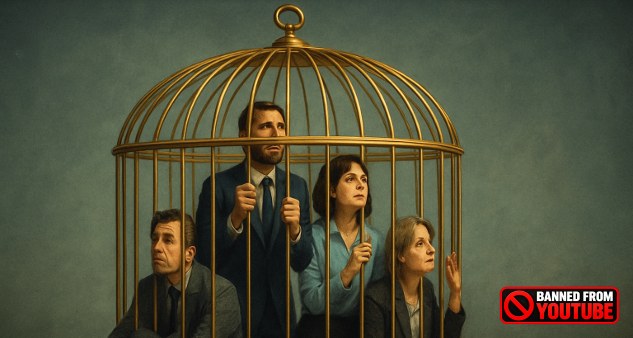
When a nation begins to trade its freedom for fear, history warns us that the bargain rarely ends well. The subtle surrender of liberty is not always forced—it is often volunteered. We’ve seen this movie before, yet here we are again, watching the credits roll in real time. The image of a citizen handing over their wallet to a smiling strongman captures more than irony—it captures a national tragedy in the making.

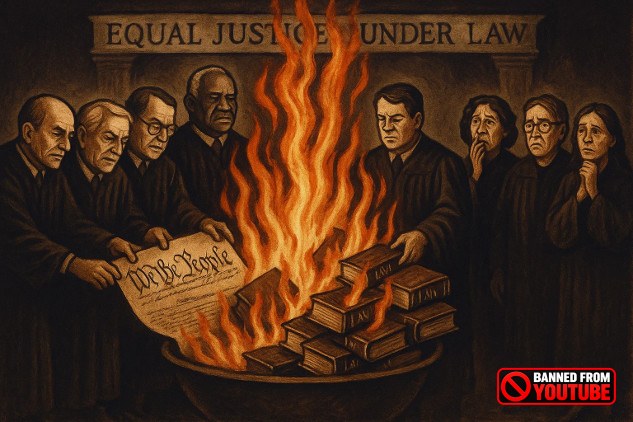
The Supreme Court just handed the Trump-aligned Department of Government Efficiency (DOGE) access to the Social Security Administration’s deepest data vaults—while shielding DOGE from public oversight. If that doesn’t convince you that today’s Supreme Court is a menace to American democracy, I’m not sure what will. It’s time to stop pretending this Court is a neutral umpire. The solution? Expand the Court. Dilute the reactionary 6-3 bloc before it locks us into an authoritarian future.

Collapse is rarely sudden. Civilizations fall slowly through environmental decline, systemic decay, and elite blindness. From the Maya to Rome, history offers chilling parallels to our own time. We’re the first to see collapse coming—and possibly the last with a chance to stop it.

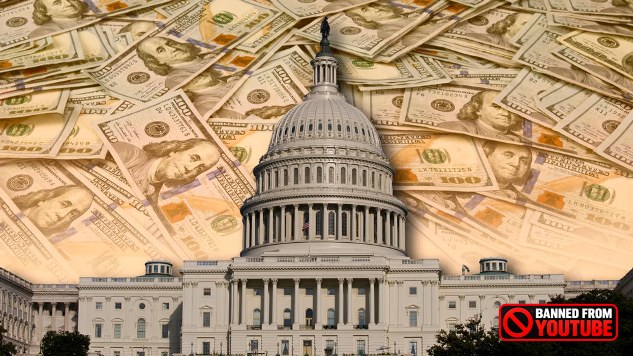
It didn’t start with Trump, but it might end with him. For over a century, American democracy has been slowly auctioned off—deal by deal, donor by donor—until the line between public service and personal profit no longer exists. From shadowy foundations to crypto schemes backed by autocrats, the corruption we once considered scandalous has become business as usual. This isn’t just a crisis of politics—it’s a crisis of survival for the Republic itself.

What happens when a nation confuses comfort with character? When expediency becomes the national pastime? In a recent conversation between David Brooks and Scott Galloway, something profound was revealed — not through what was said, but what was still left unsaid. True conservatism isn’t just missing in America; it’s dead. And what replaced it isn’t progress — it’s moral drift. Let’s talk about why that matters more than most of us want to admit.

Everywhere you look, democracy is fraying. And it’s not just the usual suspects. From the polite parliament halls of Europe to the fractured federation of America, and yes, even up there in Canada — the cracks are no longer subtle. But this isn’t new. In fact, it’s old. As old as campfires and cattle. Today’s headlines might scream about elections and extremists, but the real story is deeper: a betrayal that began long before ballots were printed or tweets were launched.

What if the cornerstone of your freedom—your right to not be imprisoned without cause—was quietly dismantled while the media focused on polls and personalities? In Trump’s second term, habeas corpus isn’t just under threat—it’s on the chopping block. This isn’t speculative. It’s historical déjà vu, supercharged with steroids, unchecked power, and a vengeance tour disguised as governance.

Ever wondered if you could guess a politician’s party just by listening to them speak? No, not by their policies or their promises—but by their word choice alone. Welcome to the strange but revealing world of politically conditioned variation, where even synonyms betray your party loyalty. Sounds ridiculous? Maybe. But the science says otherwise.

Forget the old saying “all politics is local.” In today’s America, all politics is relocation. A growing number of Americans are choosing to pack up, load the U-Haul, and move somewhere politically comforting—someplace where the neighbors won’t roll their eyes at the yard sign. Welcome to the era of partisan migration, where we vote not just with ballots, but with our feet—and those feet are walking straight into ideologically gated communities.

The United States is no longer just experiencing political turmoil—it’s undergoing a Silicon Valley-style hostile takeover. With mass firings, deregulation, and the erosion of legal accountability, Trump and his allies are applying the "move fast and break things" approach to governance. The question is: What happens when the U.S. government itself collapses?

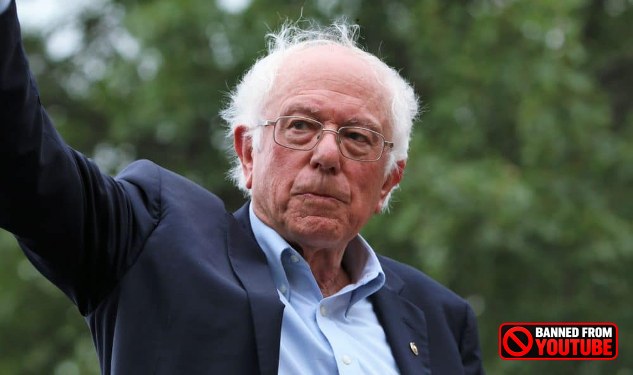
Trump’s State of the Union address was exactly what we’ve come to expect—an avalanche of deception, theatrics, and outright lies. But Bernie Sanders wasn’t having it. In a scathing response, he dismantled Trump’s biggest fabrications, exposing how they serve the billionaire class while ignoring the struggles of ordinary Americans. If you were waiting for someone to call out the charade, Bernie delivered. Let’s break it down.

The Powell Memo's influence pushed Democrats toward neoliberalism, leading to compromises under Clinton and Obama. These shifts widened inequality and left a void Trump exploited. This article examines the legacy of the Powell Memo and the real economic risks Democrats face today.