
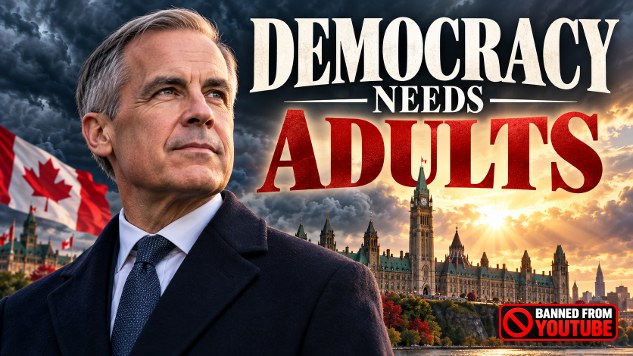



In This Article
- Why democracy is losing ground to the emotional appeal of strongman politics
- What authoritarian leaders actually sell, and why people keep buying it
- How Mark Carney models a quieter but more durable definition of strength
- Why competence and cooperation are democratic virtues, not political weaknesses
- What citizens owe to democracy in return for the leaders they say they want
Let us start with the uncomfortable part. Democracy is losing ground to authoritarianism because fear is a faster drug than truth, and a lot of people right now are afraid. Jobs that used to be stable are not. Institutions that were supposed to be trustworthy have spent decades proving otherwise. Into that gap walks the strongman with a simple prescription: give me power, point me at your enemies, and I will make the fear stop. It is a lie, but it is a satisfying lie, and that counts for more than we like to admit.
Democracy Is Facing a Leadership Crisis
There is a version of the political story we tell ourselves where democracy is the natural resting state of human civilization and authoritarianism is a brief, ugly interruption. That version is wrong, and history knows it. Democratic governance is hard. It requires people to tolerate disagreement, share power, accept uncertain outcomes, and trust institutions they cannot fully control. Most of the time, in most places, that is a difficult sell.
What makes this moment sharper is that the challenge is not just coming from outside democratic borders. It is coming from inside democratic electorates. Voters in established democracies are choosing leaders who openly admire strongmen, who treat the courts as obstacles and the press as enemies, who govern by conflict and thrive on grievance. The crisis is not a foreign invasion. It is a domestic appetite, and it deserves to be understood rather than simply condemned.
What the Strongman Is Actually Selling
The authoritarian pitch has a consistent structure, and once you see it, you cannot stop seeing it. First, you need an enemy. It does not matter much who the enemy is so long as everyone agrees to be afraid of them. Second, you need a savior. The savior is always one person, never a system or an institution, because systems and institutions cannot be personally loyal. Third, you need to redefine the language. Compromise becomes surrender. Cooperation becomes weakness. Cruelty becomes decisiveness. Loyalty becomes patriotism.
What makes this pitch genuinely seductive is that it offers certainty. The world is complicated and getting more so, and certainty is a commodity people will pay almost any price for. The authoritarian says: stop worrying about complexity. I will tell you who is responsible for your suffering, and I will punish them. That is not governance. It is a protection racket with better branding. But it works, and pretending it does not work is how democracies keep getting caught off guard by it.
A Different Definition of Strength
Mark Carney, the Prime Minister of Canada, is not a theatrical figure. He does not hold rallies designed to look like coronations. He does not pick unnecessary fights to demonstrate dominance. He does not confuse aggression with authority. For people accustomed to the operatic performance style of contemporary authoritarian politics, Carney can look almost boring, which is exactly the point worth examining.
Real strength, the durable kind that holds up under pressure, tends to look nothing like the television version. It looks like someone who has studied the problem, prepared for the contingency, kept their composure when the situation deteriorated, and made a decision based on evidence rather than ego. Carney managed two of the most significant economic crises of the modern era, the 2008 financial collapse as Governor of the Bank of Canada and the Brexit economic shock as Governor of the Bank of England. He did not do it by being loud. He did it by knowing what he was doing, which turns out to be quite useful in a crisis.
The authoritarian says strength is domination. Carney's career suggests strength is preparation. Those are not the same philosophy dressed in different clothes. They produce entirely different governments.
Telling People the Truth Even When It Is Uncomfortable
One of the quiet revolutions in Carney's early political communication was his willingness to say plainly that the international order that shaped the postwar decades has broken down. Not weakened. Not shifted. Broken down. That is a significant thing to say out loud, because it forecloses the comforting narrative that things will return to normal if we wait long enough or elect the right person.
Politicians who tell people what they want to hear are not being kind. They are running up a debt that someone else will have to pay. The comfortable lie about trade stability, about alliance permanence, about the durability of rules-based international systems, delays the harder work of actually adapting to changed circumstances. Carney's willingness to name the reality, even the unsettling version of it, is not pessimism. It is the precondition for any honest policy response.
Democratic leadership has to begin with a shared account of what is actually happening. You cannot build a coalition around a problem nobody is allowed to name. That sounds obvious. It is surprisingly rare.
Competence Is Not Boring It Is Essential
There is a school of political thought, very fashionable in some circles, that treats expertise as elitist and competence as a kind of con. The idea is that credentialed people have been running things for decades and the results have not been good, so credentials are worthless. There is a sliver of truth buried in there, just enough to make the whole argument feel satisfying.
But here is the mechanism worth understanding. Authoritarian leaders benefit enormously from institutional failure, because institutional failure creates the conditions where a single powerful person seems necessary. When the central bank is trusted, when the courts function, when the regulatory agencies do their jobs, people do not need a savior. Saviors only become appealing when everything else has stopped working. So when an authoritarian leader attacks institutions, mocks expertise, and fills agencies with loyalists who cannot do the job, they are not just being corrupt. They are manufacturing the very desperation that makes them seem indispensable. It is a tidy trick.
Carney represents the opposite model. His argument, demonstrated by his career rather than merely asserted in speeches, is that knowing what you are doing matters. That judgment built through experience matters. That the difference between a well-managed crisis and a catastrophic one is often a matter of who is in the room and what they actually understand about the problem. Democracy cannot afford to treat that as elitist. It cannot afford incompetence dressed up as authenticity.
Cooperation Is Strength Not Surrender
One of the most effective reframings in authoritarian politics is the idea that international cooperation represents weakness, that a strong nation stands alone and takes what it needs. It has a bracing, frontier-novel quality to it. It is also catastrophically wrong as a description of how power actually works in the modern world.
Carney has spoken directly about the importance of building coalitions among democratic middle powers, countries that are not large enough to impose their will unilaterally but are significant enough, collectively, to shape the terms of global trade, security, and governance. Canada, Australia, the United Kingdom, the Nordic countries, Japan, these are not bit players. Working together, they represent an enormous share of global economic output and democratic legitimacy. Retreating into isolation does not protect sovereignty. It just means you are alone when the larger powers come to renegotiate the terms.
Understanding that cooperation multiplies strength rather than diluting it is not a soft, idealistic position. It is a strategic calculation, the same one that produced NATO, the same one that underpins every trade agreement that has ever benefited a smaller economy. The strongman says alliances are chains. The evidence says alliances are leverage.
Strengthening Institutions Rather Than Replacing Them
The defining structural difference between democratic and authoritarian leadership is what each does to institutions. The authoritarian weakens them deliberately. Not always loudly, not always immediately, but systematically. Courts get packed with loyalists. Regulatory agencies get defunded or captured. The press gets delegitimized. Civil service independence gets eroded. The goal is to make citizens feel that the only reliable protection they have is the leader personally, which conveniently makes the leader very hard to remove.
Democratic leaders do the opposite, or they are supposed to. They strengthen the institutions that exist precisely so that no single person becomes indispensable. They enforce norms they could personally benefit from ignoring. They accept rulings that go against them. They fund agencies that will sometimes make their lives harder. This is not weakness. It is the structural commitment to a system that outlasts any individual, including themselves.
Carney has not been prime minister long enough to be judged fully on this measure. But his background in institution-building, in central banking specifically, which requires fierce independence from political pressure to function at all, suggests he understands the principle at a level deeper than campaign rhetoric.
Leadership That Calls Upon Our Mature Selves
The authoritarian appeal is fundamentally an appeal to the frightened part of a person. The part that wants certainty when the world is uncertain. The part that wants someone to blame when blame feels better than complexity. The part that wants a parent figure to make the adult problems stop. That part of us is real, and it deserves compassion. But governing in service of it produces governments that make everything worse.
What democratic leadership asks is harder. It asks citizens to accept that some problems do not have clean solutions. It asks people to share responsibility rather than delegate it entirely. It asks for the patience to build things that take longer than one election cycle to show results. It asks people to remain engaged rather than simply loyal. These are the demands of maturity, not slogans, not performance, not the borrowed courage of blaming a foreign country for domestic failures.
Carney's political style, calm, evidence-based, honest about difficulty, is an implicit argument that citizens are capable of handling the truth. That is both more respectful and more demanding than the strongman's offer. It treats voters like adults. That is rarer than it should be.
No Leader Is a Savior and Carney Is No Exception
This is the part that needs saying clearly, because the antidote to strongman worship is not any other variety of the same mistake. Carney is not a savior. He is a political leader with an impressive resumé, a moment of unusual public trust, and a set of ideas that happen to be more grounded in reality than what much of the democratic world has been offered lately.
His democratic promise will be measured by outcomes, not intentions. Did wages grow for people who needed them to? Did housing become more accessible? Did the energy transition create jobs in places that lost them? Did Canada's alliances hold under pressure? Did institutions become stronger or were they quietly hollowed out in the service of a different set of interests? These are the questions that matter, and they will take years to answer honestly.
Pedestals are for statues. Politicians belong on the ground where the work gets done and the accountability is real. The appropriate response to a leader who seems to be doing things right is not adoration. It is continued attention.
What Democracy Actually Needs Right Now
Democracy will not be rescued by producing its own version of the strongman. It will not be saved by finding a leader impressive enough to make citizens stop paying attention. It will be renewed, if it is to be renewed at all, by leaders who tell the truth when it is inconvenient, who respect the institutions that constrain their own power, who build cooperation rather than manufacture enemies, and who ask more of citizens rather than less.
Mark Carney may or may not succeed as prime minister of Canada. Politics is long and complicated and full of surprises, few of them pleasant. But the model he represents, the idea that competence is not elitist, that cooperation is not capitulation, that truth-telling is not weakness, that institutions matter more than personalities, that model is worth naming and defending precisely because the alternative is gaining ground so fast.
The strongman offers certainty. Democracy offers something harder and more honest: the chance to build something that lasts past the strongman's life in power. That is a more difficult sell. It has always been a more difficult sell. But it is the only one that actually works.
jennings_bio
Recommended Books
How Democracies Die by Steven Levitsky and Daniel Ziblatt — A rigorous and readable examination of how elected leaders have dismantled democratic systems from within, drawing on historical examples from Europe and Latin America.
The People vs. Democracy by Yascha Mounk — An urgent analysis of why liberal democracy is coming apart and what citizens and leaders can do to hold it together before the fractures become permanent.
On Tyranny by Timothy Snyder — Twenty sharp, practical lessons drawn from the twentieth century's darkest political chapters, written for citizens who want to recognize authoritarian patterns before they become unavoidable.
Article Recap
At a moment when authoritarian leadership styles are attracting voters across the democratic world, Mark Carney as prime minister of Canada offers a model grounded in democratic strength through competence, truth-telling, and institutional respect rather than fear and manufactured enemies. The long-term test of democratic leadership in a time of political crisis is not whether a leader inspires loyalty but whether their governance builds resilience, distributes opportunity, and leaves institutions stronger than it found them. Democracy does not need a strongman of its own. It needs leaders who respect its complexity and citizens willing to meet that complexity with their eyes open.
#MarkCarney #DemocraticLeadership #CanadianPolitics #AuthoritarianismVsDemocracy #StrongmanPolitics #PrimeMinisterCanada #PoliticalCompetence #DemocracyInCrisis #InstitutionalStrength #GlobalDemocracy